LEAFLET: THE BLACK ARCH
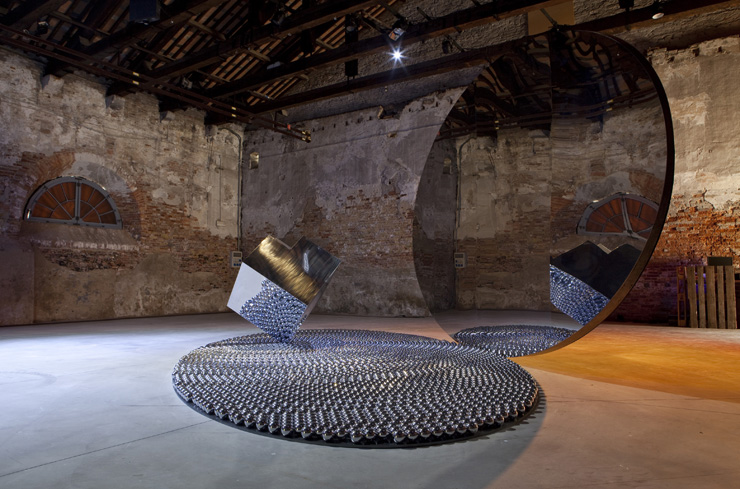
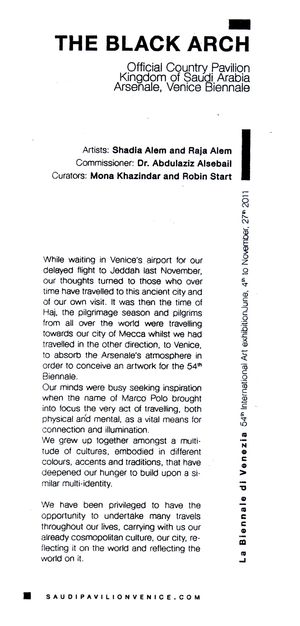
While visiting the Biennale exhibition on Oct 2011, Class 2E students focused their attention on an artwork, entitled “The Black Arch”. They listened to a short introduction, took pictures and enjoyed the experience. Back in the classroom, they tried to deepen their understanding by investigating different aspects. The starting point was a leaflet handed out at the Biennale. Students read and analyzed the text and then tried to find the leading path to a better appreciation of the artwork.
Here is how they worked and what they found about the Black Arch” (of course, their global work has been synthetised).
|
Shadia e Raja Alem
|
|
1-TEXT READING
2-TEXT analyisis
3- INTERNET Research Project
|
|
Description
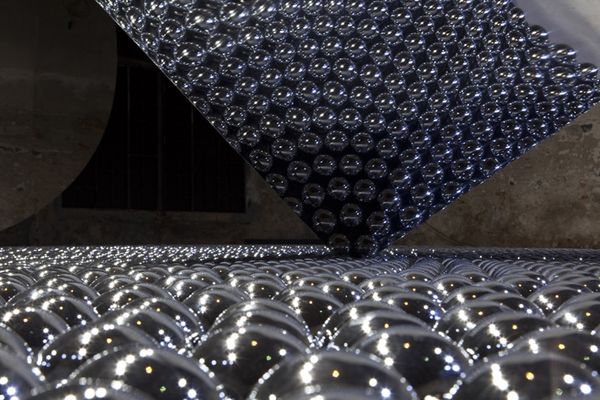
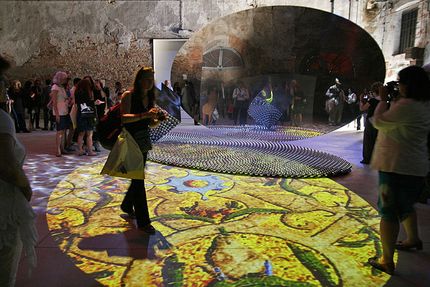
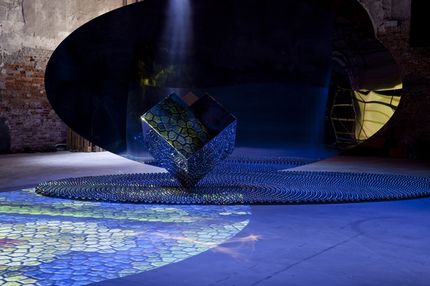
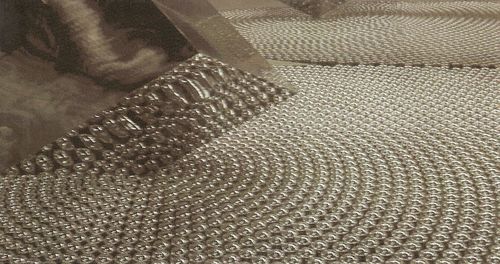
«This sculptural celebration embodies a polished steel oval, one side reflective and the other side black, surrounded by small chrome spheres and a small cube filled with pebbles.
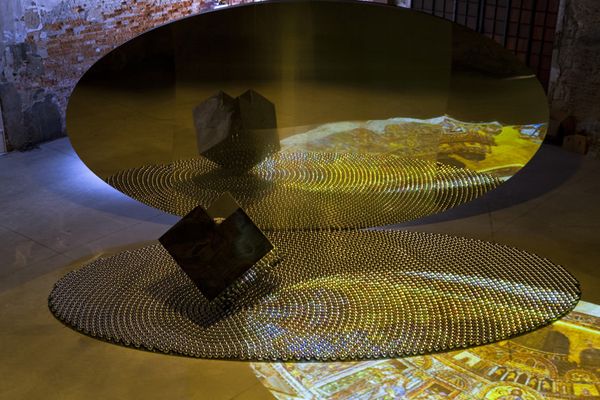
The Black arch was a flat, solid black ellipse some seven meters long. Around its lower curves were glimmers of light and colour from images projected into the floor. You are stimulated to find out what there on the other side, where the view transformed: the ellipse becomes a mirror of stainless steel. On the floor there was a pool-like of silver spheres. In the pool of spheres a mirrored cube stood about shoulder-high. It is called “The Black Arch” because the first thing that you can see is a black arch».
(Sara Caccin)
«The work evokes the experience of Muslim pilgrims – the rituals circumambulations around the Ka’aba (the building situated in the courtyard of the masjid al-Haram in Mecca, wich is the Black Stone)».
(Mattia Pasqualin)
«This Artwork was done with the play of the light and sound, then there are more than 100 painted gray balls glued to each other, which are reflected on a huge mirror in the shape of ellipse». (Antonio Roncato)
Our Opinion
«I think the idea of creating a cosmopolitan culture is a very positive thing, because so we can learn new experiences with both traditions, with both people. The "traveling" is a very important thing because it allows us to meet and then deal with the ways of life, foods, languages, ways of thinking and much more.
The artwork that we saw at Biennale represents the concept of black, which in the authors' idea is psycological (the past of te authors) and a physical fact (the color in their hometown). It is also the way in which the past is reflected, as a mirror, in the present and it is very interesting».
(Federico Terren)
«Fortunately I saw this opera and I was fascinated by the depth of artists’ ideas.
The contrast of black and light was just amazing. And the connection between Mecca and Venice was very interesting, because it's very hard to join together the culture of two different countries like the objects used by the artist's hand.
It was a nice experience and an opportunity to learn something about the modern art's forerunners!».
(Iulia Arhip)
|
|
|
Sitography: www.the-saudi.net/saudi-arabia/jeddah/index.html
Classe 2E |
|